

Public seminar: Carolyn Abbate (Harvard University)
Bourgeois Vacation Spot

Free entry, no registration required
Abstract
"Bourgeois vacation spot" is an awkward translation in the 1994 English version of Theodor W. Adorno's essay Bürgerliche Oper (1955)-the original is "bürgerliche Erholungsstätte."
"Erholungsstätte" has meanings that go beyond "vacation spot." A place to rest, to regain one's equilibrium, to recover, to renew the spirit. A place to take the waters. Certainly also, an escape. As Adorno put it, nineteenth-century opera enabled the bourgeoisie's recuperative journey into rest and renewal because opera "allowed itself so little involvement in the social conflicts of the nineteenth century"-which (cue the classic Marxist magic) meant that opera crassly traces historical developments because it remained so unconscious and unknowing.
We feel that we are meant to deplore this, both the place that opera is said to take us and allowing ourselves to be taken there. But we might also have a quarrel with the claim that opera and its manifestations did not, and do not, "participate in social conflicts," which now rings false to our ears. Are contemporary opera studies not fully invested in a theory that opera, in reflecting and portraying social ills and human evils for an audience, moves (or should move) those who see and hear it to indignation, to a hunger for change, to activism? Music philosopher Fumi Okiji queries such beliefs in a recent book about epiphanic moments in musical experiences: how do we know that music does what we say it does? To put it closer to home: does opera have such efficacy?
I am going to explore this, and start by looking at fantasies about efficacy that are built into opera's genetic code.
Biography
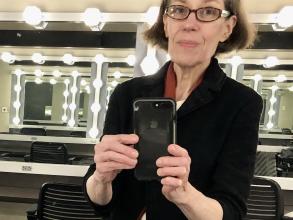
Carolyn Abbate, Paul and Catherine Buttenwieser University Professor at Harvard University, writes about and teaches classes centered on opera as it has evolved over the past four centuries, with special emphasis on the nineteenth and twentieth centuries. Her work ranges widely, drawing from disciplines including linguistics and semiotics, philosophy, film sound and music, and the history of science. Outside academia, she has worked as a dramaturge and director, and as a translator. Forthcoming projects include essays on microphonics in past historical eras, on musical efficacy, and on Richard Wagner's entanglements with nineteenth-century organic chemistry.