New research shows how cultural transmission shapes the evolution of music

Departmental Lecturer Dr Manuel Anglada-Tort has contributed to the article 'Large-scale iterated singing experiments reveal oral transmission mechanisms underlying music evolution', published this week in the journal Current Biology. The research demonstrates that the constraints in the way our brains work can shape the way people interact when creating music, influencing its evolution. The research team made up of scientists from the University of Oxford, the University of Cambridge, and the Max Planck Institute for Empirical Aesthetics, used singing experiments to perform the largest ever cultural transmission study on the evolution of music.
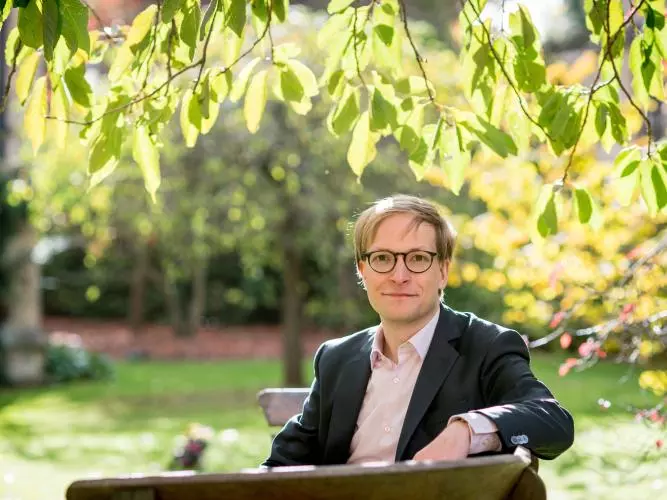
Dr Manuel Anglada-Tort is a Departmental Lecturer in the Faculty of Music and leads the Music, Culture, and Cognition (MCC) Lab at the University of Oxford. He is also a visiting researcher in the Computational Auditory Perception Group at Max Planck Institute for Empirical Aesthetics. His published work covers a variety of research topics, including the psychology of music, auditory perception, empirical aesthetics, production and consumption of creative work, popularity dynamics, collective cognition, and cultural evolution.
Visit the Oxford University website to find out more about the research.