

Public seminar: Erin Johnson-Williams (University of Southampton)
‘Audible Incarceration: Empire, Biopolitics and Modern Listening’
Biography
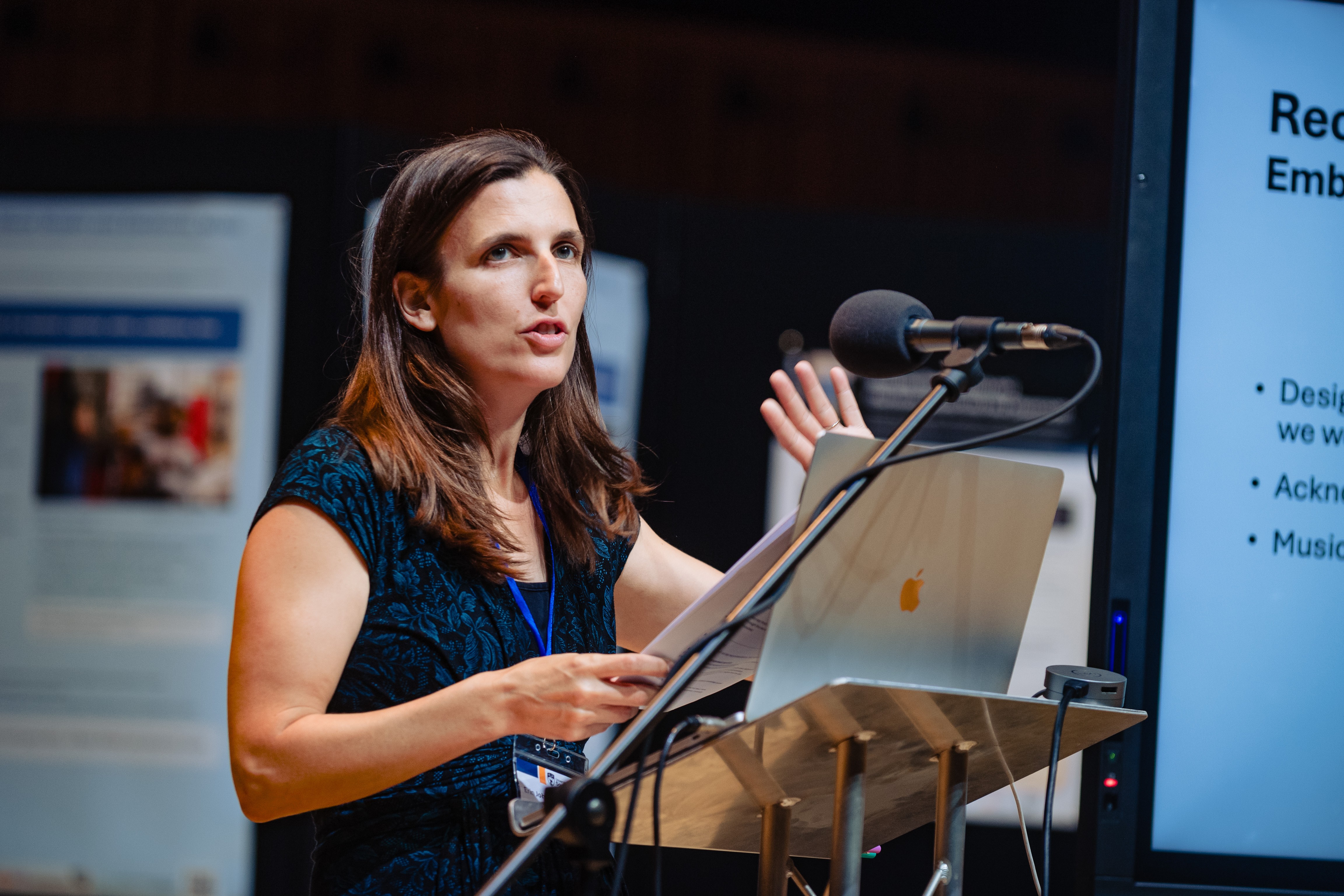
Erin Johnson-Williams is Associate Professor in Music Education and Social Justice at the University of Southampton. Her research focuses on decolonisation, the imperial legacies of music education, trauma studies, gender and maternity, hymns and race, and soundscapes of colonial violence. Erin is co-editor of Intersectional Encounters in the Nineteenth-Century Archive: New Essays on Power and Discourse (Bloomsbury Academic: 2022), and Hymns and Constructions of Race: Mobility, Agency, De/Coloniality (Routledge, 2024). She has also co-edited special issues of the journals Women and Music, Postcolonial Studies and the Yale Journal of Music and Religion. Erin is a founding Director of Southampton’s Centre for Music Education and Social Justice, and from 2024-2026 was Project Lead for the AHRC Hub for Public Engagement with Music Research.
Abstract
How did imperial technologies of biopolitical encampment impact modes of modern listening? In this paper I consider the colonial hymn as a means of negotiating biopolitical strategies of control in the concentration camps of the South African War (1899–1902). Within these spaces of enforced ‘congregating’, communal hymn singing emerged as a form of theological and aesthetic confrontation at the moment when the ‘modern’ concentration camp – or, encampment based on new, racialised categories of the human – was invented. Drawing on late nineteenth- and early twentieth-century British theories of biopolitical control, enclosure and racial degeneration, I propose that the first colonial concentration camps became heightened sites of imperial ‘sonic congregating’. Hymn singing, as one of the few sanctioned forms of music-making within these camps, thus became a means of responding to, reinforcing and resisting new, racialised forms of mass incarceration, through its ability to mediate (but also re-sound) religious and national identities within interned spaces. Reading (into) sonic histories of colonial violence as a complex negotiation between mass conformity and the agency of collective resistance, I explore how music within interned spaces can be a kind of ‘audible memorialising’ that fosters creative dialogues about biopolitical control and modern identity.